Cornus stolonifera (sericea)

characteristics
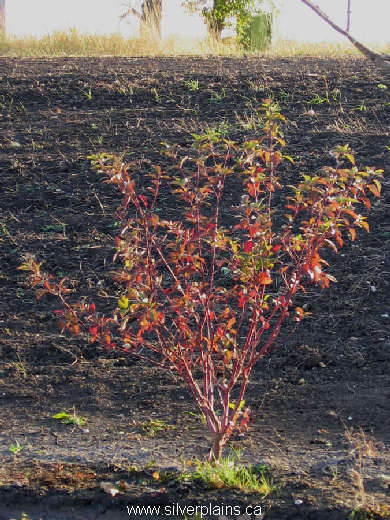
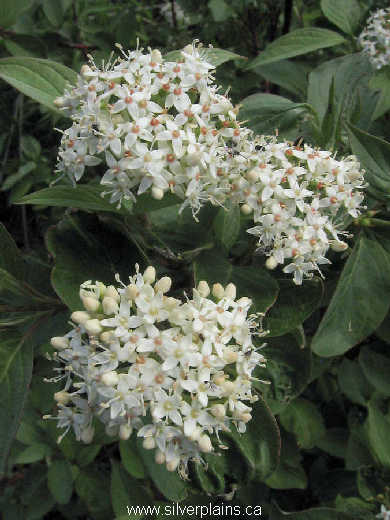
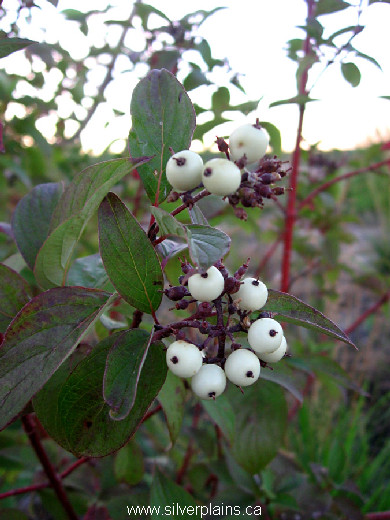
A loosely spreading multi-stemmed shrub; often forming thickets. Stems and twigs are dark red when young, gradually fading to greenish-grey. Stems (on mature plants as well) become red again in the fall and winter. Small creamy white flowers in flat topped clusters. Fruit is white or blue-tinged berries. Leaves turn red then yellow in the fall.
18,400 seeds/pound; starts from seed, bare root, cuttings.
| T | SSN | H | W | sun | soil | H2O | fire | N2 | pH | summer | fall | flower (seed) |
|---|---|---|---|---|---|---|---|---|---|---|---|---|
| D | W | 2.1 | 2.1 | S/PS | F-M-C | M-MW | •• | • | 4.8-7.0 | green-grey | yellow (red) | white (white) |
habitat
River banks, lake shores, swamps, and floodplains.
uses
Attracts waterfowl, marsh, and shorebirds; large and small mammals. Berries are a fall food source for a variety of bird species.
Attracts orange sulphur butterflies.
North American aboriginals made a red dye from the bark.
Considered an ornamental shrub in horticultural landscaping because of the red stems.

Comments