August 21tap images for gallery view
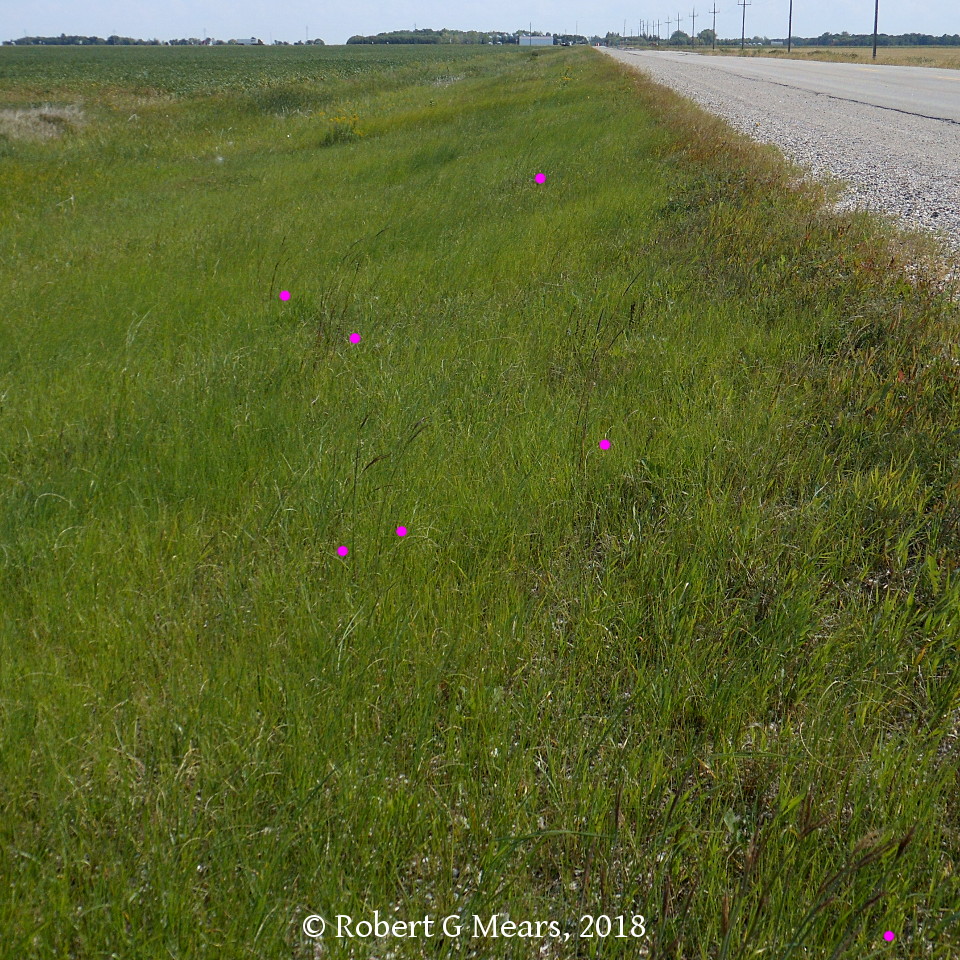
I've been burning the highway ditch on the south side of our property for 10 or 11 years. It is the safest place to burn and, when I started, I was learning how. Along with slowly decreasing some undesirable species we are now seeing more native plants growing there. Prairie cordgrass (which was already present) is increasing. And last year seven big bluestems volunteered. They are joined by Canada anemone, narrowleaf sunflower, Canada goldenrod and common milkweed. It seems safe to say that mowing favours the exotics while burning favours the natives. Sorry that the big bluestem is difficult to see. Photographing a "field" of grasses is too much information for the image. The magenta dots indicate the volunteers.
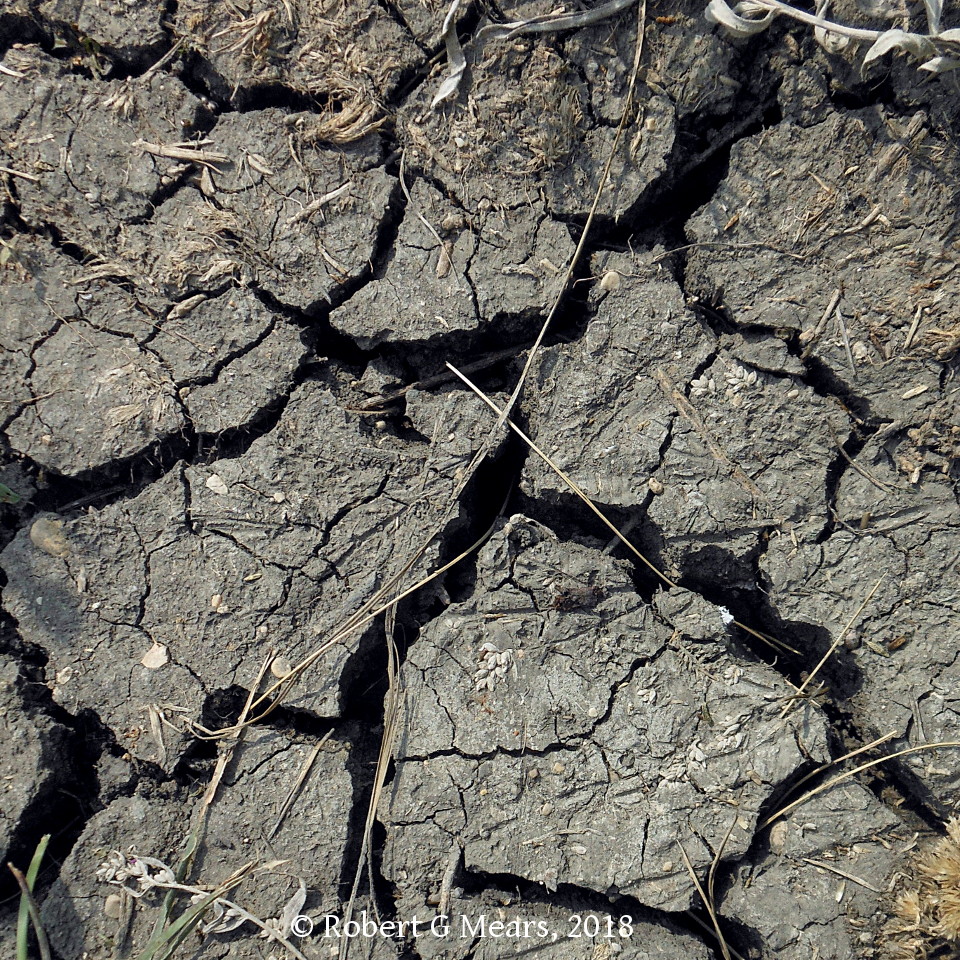
It's called vertisolic soil. (Known affectionately as Manitoba gumbo.) It has a high clay content. And, as anyone who has worked with it knows, clay shrinks when it dries. In the case of southern Manitoba the clay is mixed with black chernozemic which is the richest soil on the planet. When the soil dries organic material falls in the cracks. When it rains the soil swells and the cracks close. This back and forth process leads to the soil amending itself over centuries.
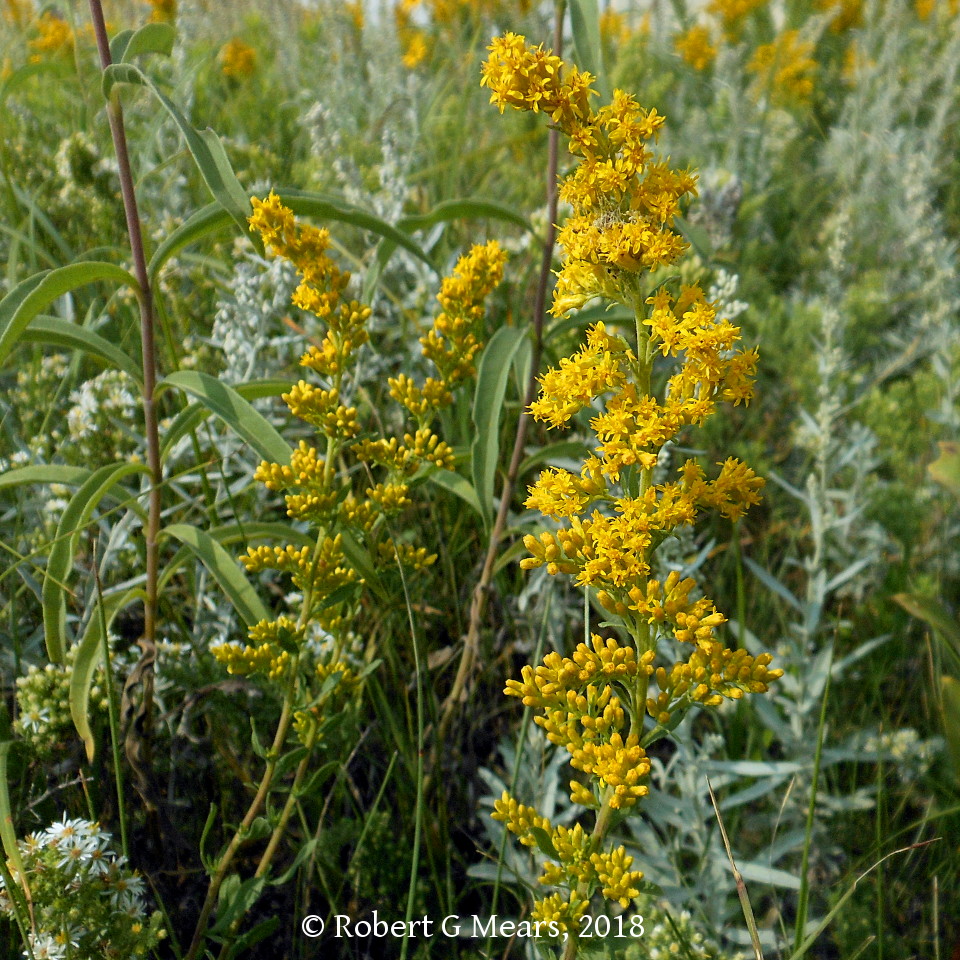
Good day. I'm a gray goldenrod, Solidago nemoralis Aiton. Some people in these parts call us showy goldenrod. You might also call us kinky goldenrod because our flower spikes always have a distinct kink. We're popular with lots of critters. Some like our nectar, some like to eat our leaves.
August 22tap images for gallery view

Good afternoon. I'm a long-horned bee in the Melissodes genus. There are around 140 species of us. Botans and agrons consider us important pollinators. We especially like sunflowers, even the ones you folks grow as crops. You're right, my antennae aren't very long. That's because I'm a female. It's the males who have the really long "horns". We nest in the ground under brush.
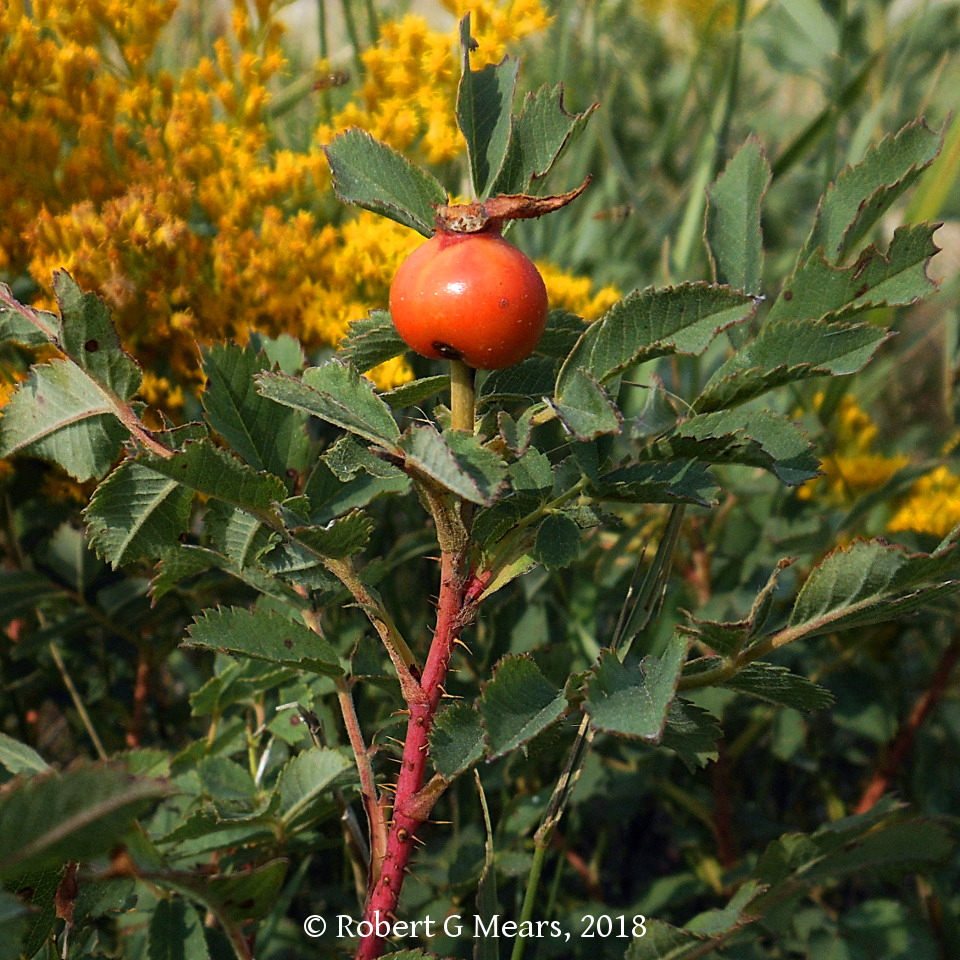
No, this is not a small tomato. It's a hip. A prairie rose hip, Rosa arkansana. You can eat them raw, stewed or candied. They're good for you, too.
Lots of mammals, small and large, eat them. So do all kinds of birds.
Make sure you remove the little hairy "achenes" inside the fruit or you may get "itchy bottom".
180823tap images for gallery view
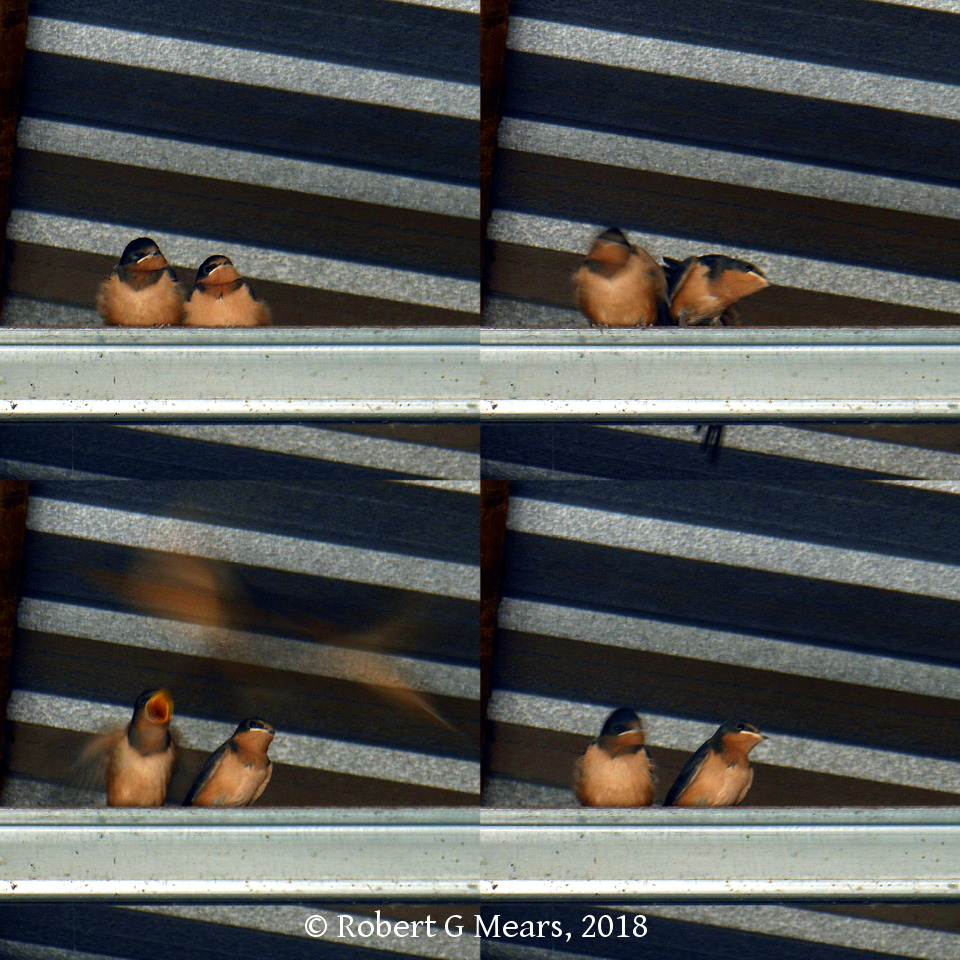
Nice catch.
Thanks.
What was it?
A fly of some kind. Tasty, too.
Who's that?
The photog.
Well, tell him we're barn swallows, Hirundo rustica.
Okay ...
Hey buddy!
180825tap images for gallery view
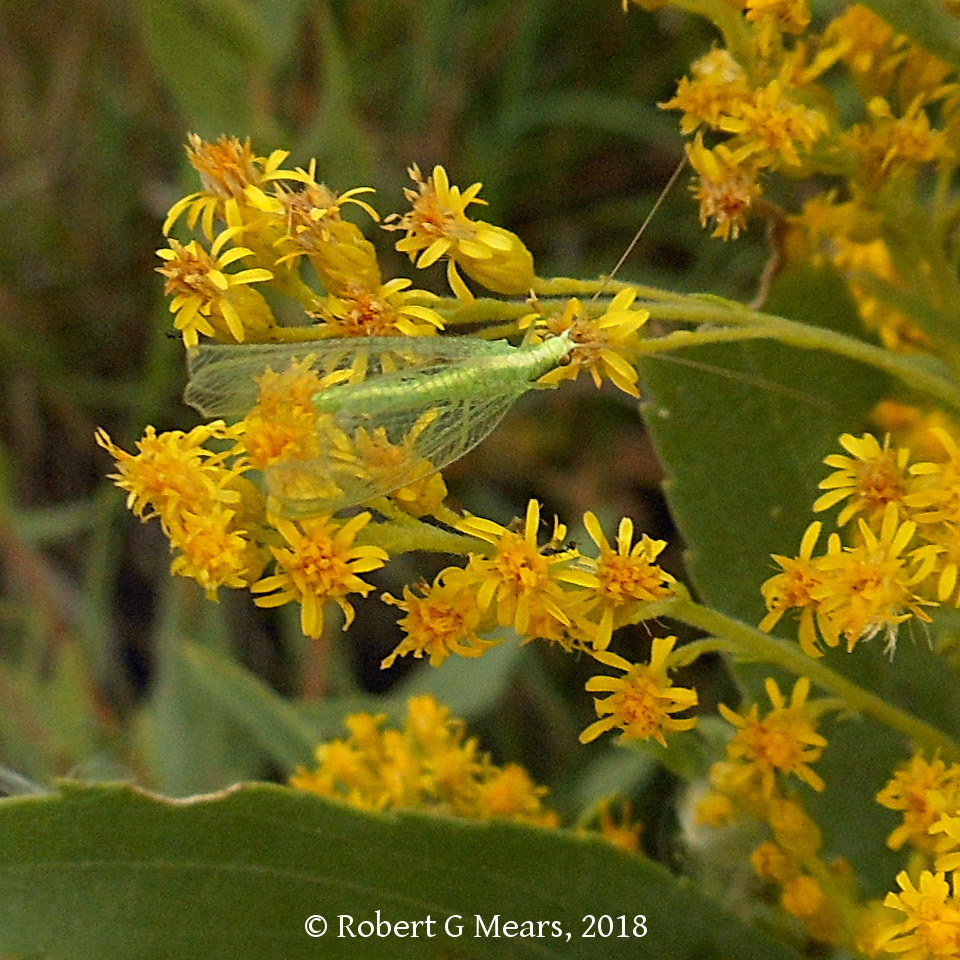
Hey there. I'm a green lacewing, Neuroptera Chrysopidae. At this stage of our life cycle we like a bit of nectar with a dash of pollen. Earlier on, before we pupate, back when we were larvae, our favourite is aphids. That's why the little guys are called aphidlions.
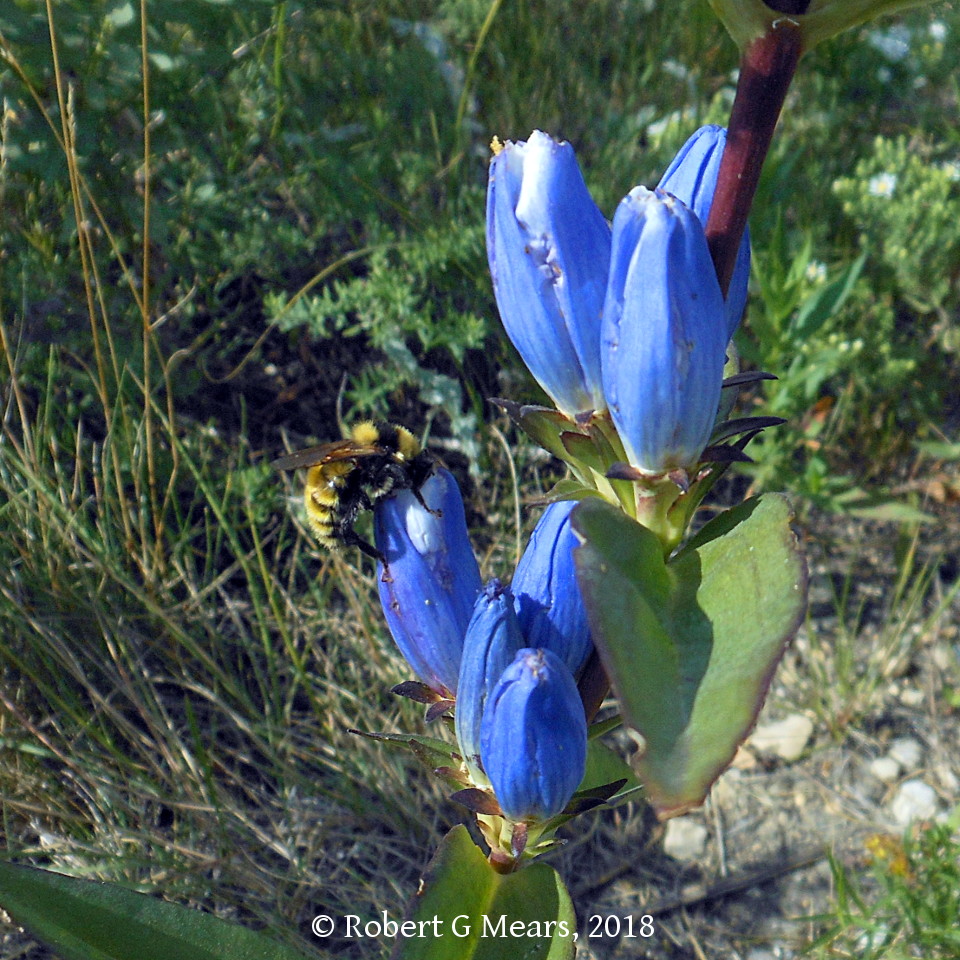
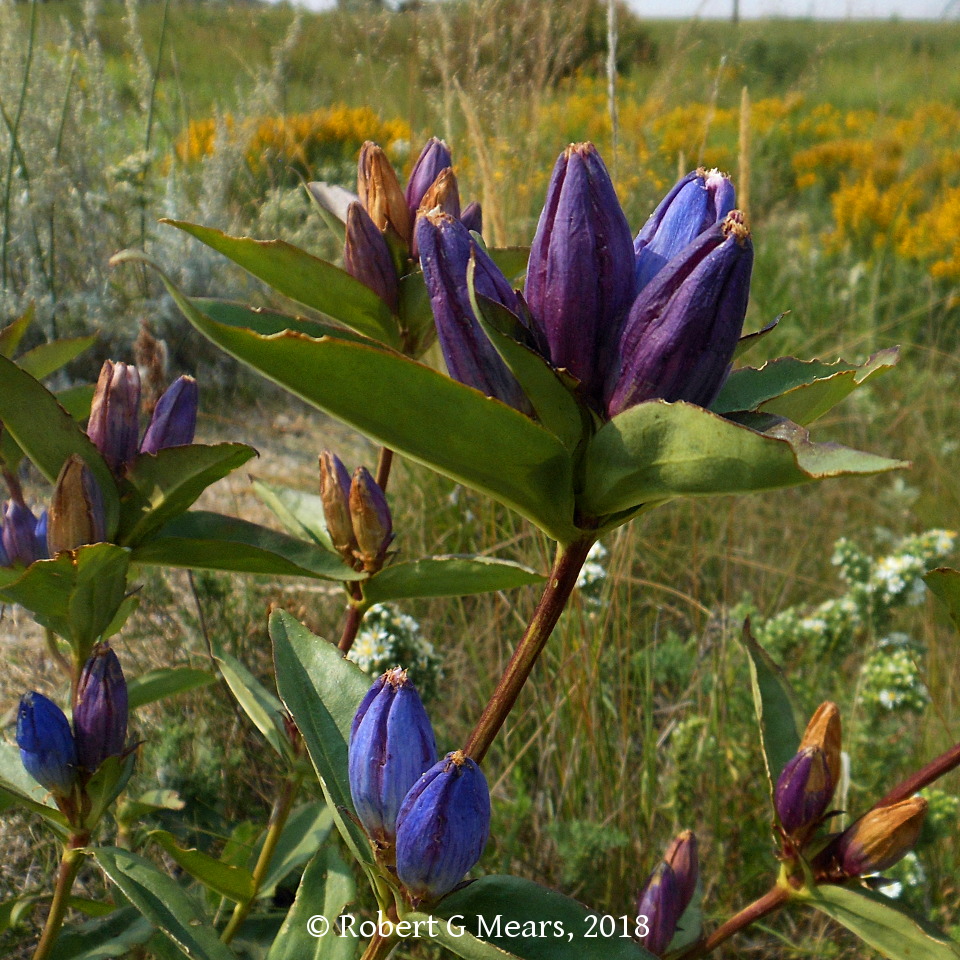
Hello. So you want to know how to get the nectar from this closed gentian? Well, first you peal back the tops of the petals to make a bit of an opening. Then you crawl in. That's right. All the way inside. Once inside you rummage around, pick up a bit of pollen and use your proboscis to get the nectar. Oh yeah, I'm a bumblebee, Bombus sp.
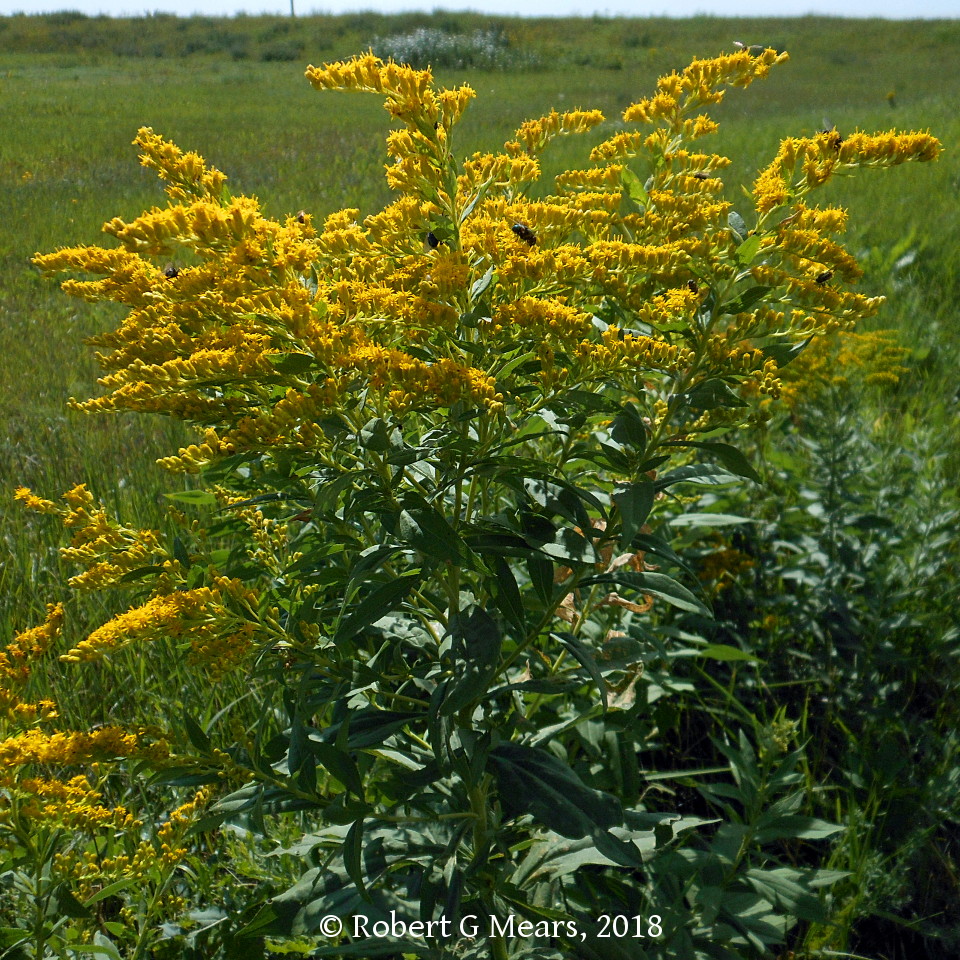
Hey. Giant goldenrod here. Solidago gigantea Ait. in science speak. We look similar to Canada goldenrod but our leaves are more serrated (just a bit), we grow way taller (with the right conditions) and our flower panicles splay out more. Our nectar is popular with bees, hoverflies and wasps. Beetles like our pollen.

The tenders of this site are pleasantly surprised to see the profusion of native plants growing in the mudflat around the pond. In the foreground here are sloughgrass (seed), nodding beggartick (flower), southern water plantain (seed) and cattails (no flower).
180826tap images for gallery view
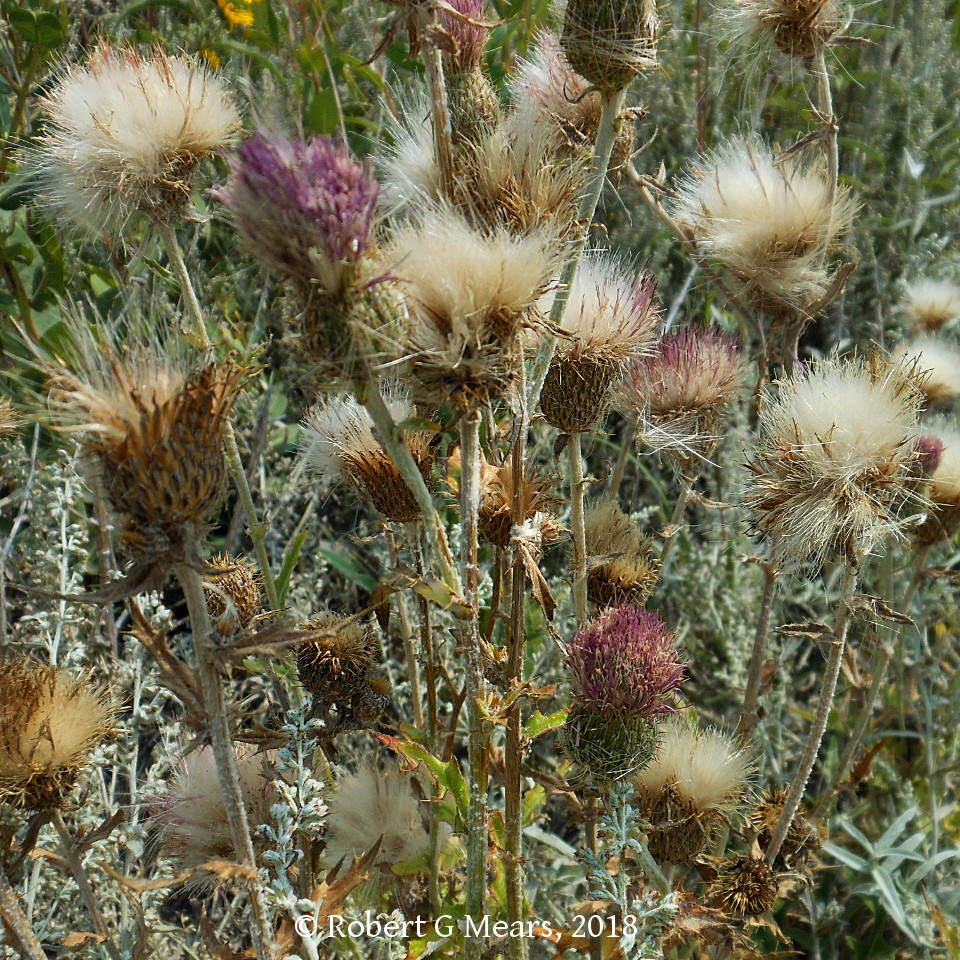
You can always tell when American goldfinches have visited. They love our seeds so much. And their ripping our seed heads apart helps with dispersal so we don't mind one bit. Oh, yeah we're Flodman's thistle, Cirsium flodmanii.
Well, like I said, our flowers turn purple. It means the flower has been pollinated. And then they turn a crusty light brown colour with crinkly petals that sort of peel apart over the winter. Each flower contains over 100 tiny seeds. When a seed germinates it will be three years before the new plant produces flowers.
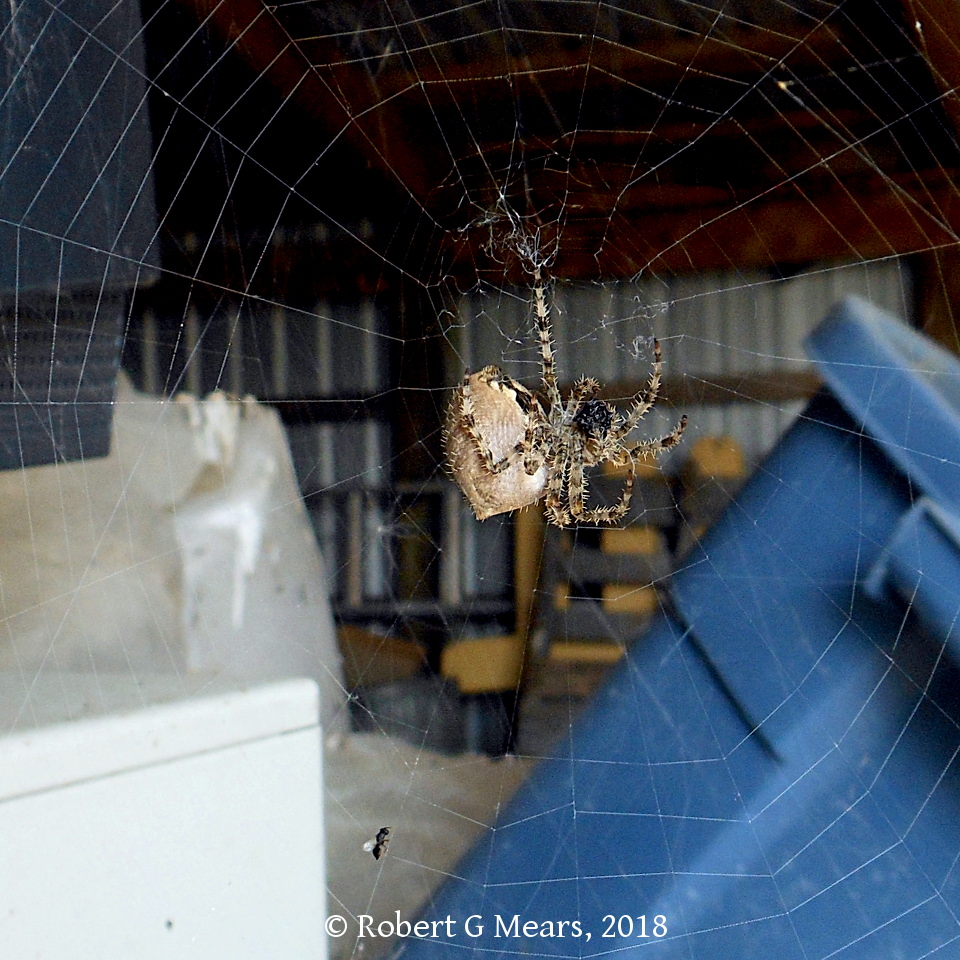
So this turned out to be just the right spot for my web. This fly I'm eating is, well, scrumptious. Yeah, you remembered. I'm a cat-faced spider. Some people call us jewel spiders. Scary though you may think we are, humans have nothing to worry about; we don't bite. For flies and other small insects it's a different story. So, if you can live with our webs ...
180827tap images for gallery view
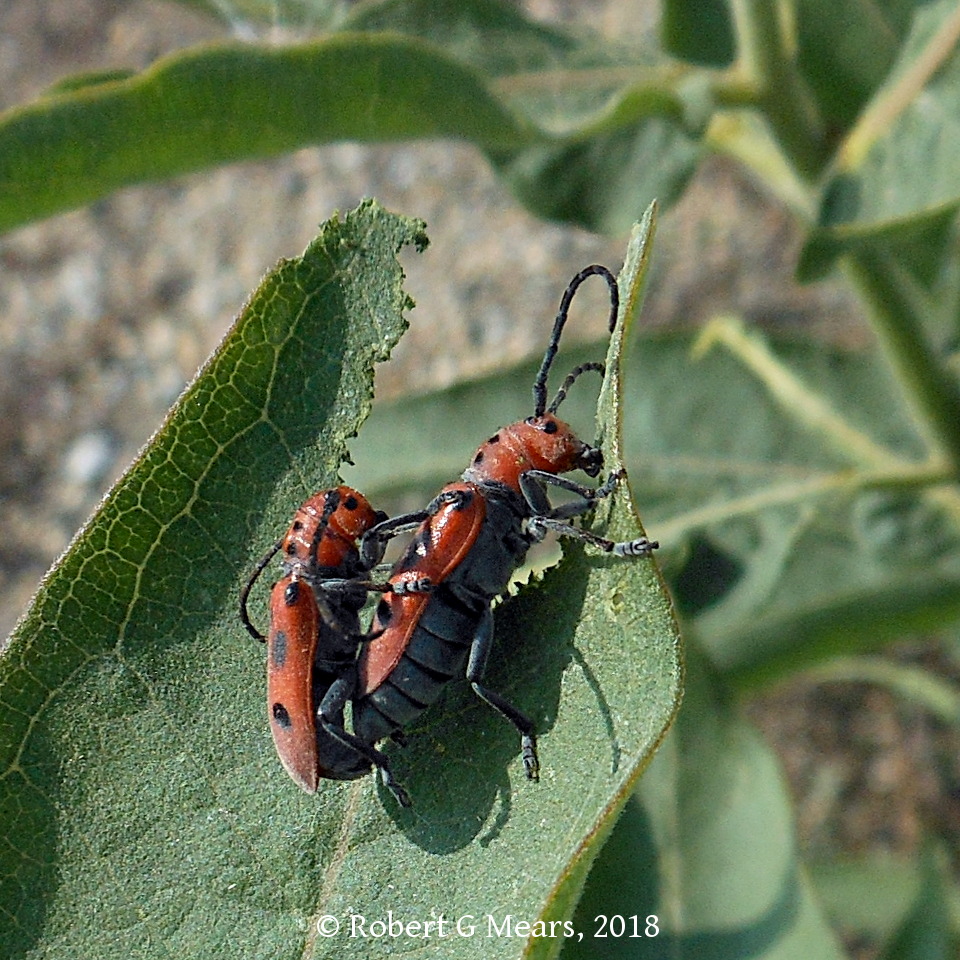
Hey, how's it going? We're a pair of red milkweed beetles. Tetraopes tetrophthalmus to an entom. As you can see we're multitasking. We do this a lot. We eat milkweed which, as you know, can spread pretty quickly, especially if there are not that many monarch caterpillars. We help keep the plant in check.
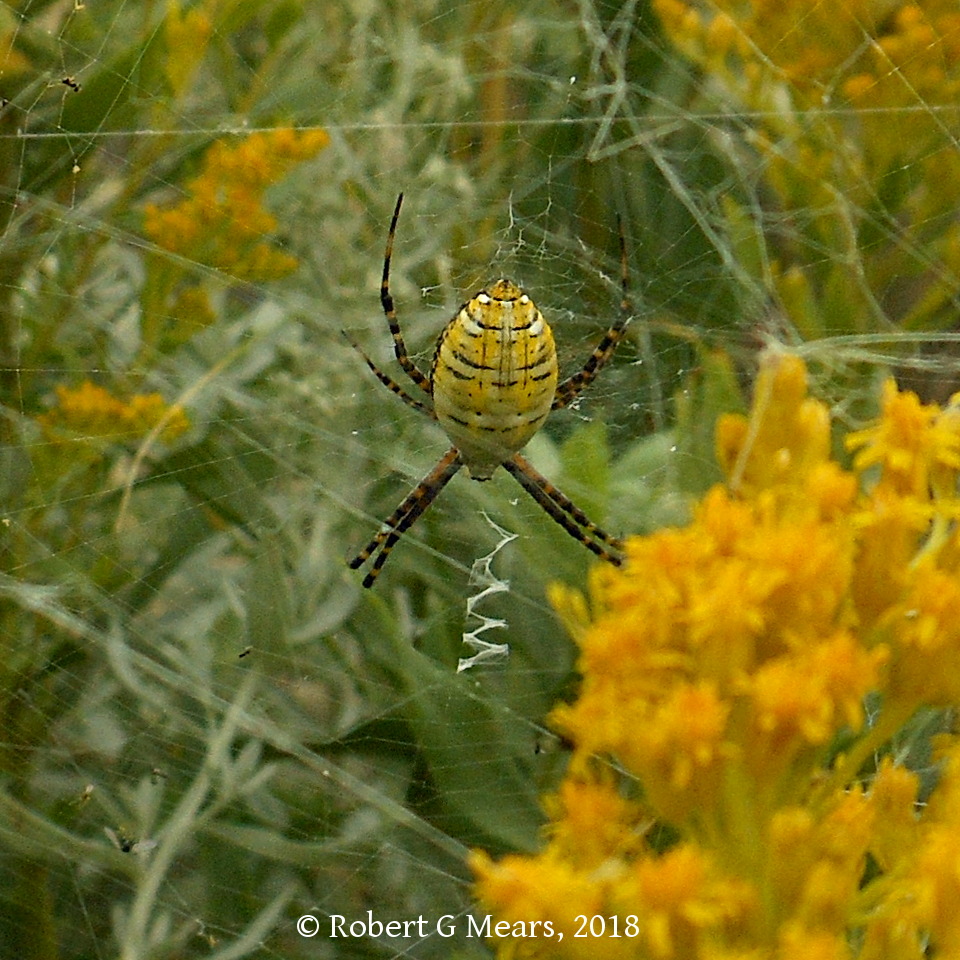
Hi again bro'. I'm that female banded garden spider you met a week ago. As you can see there's lots of good eats here. Yes, I'm almost twice as big as I was. I look different because this is my top side. Oh yeah entoms call us Argiope trifasciata. There's lots written about us.

Oh hi. Nice to see you. I'm a celery looper moth. Anagrapha falcifera in science speak. The celery part is because our larvae like to eat celery and such. They also bunch up (loop) when they crawl around. But they don't eat just your vegetable plants. They like plantain, clover and Viburnums like highbush cranberry, too.
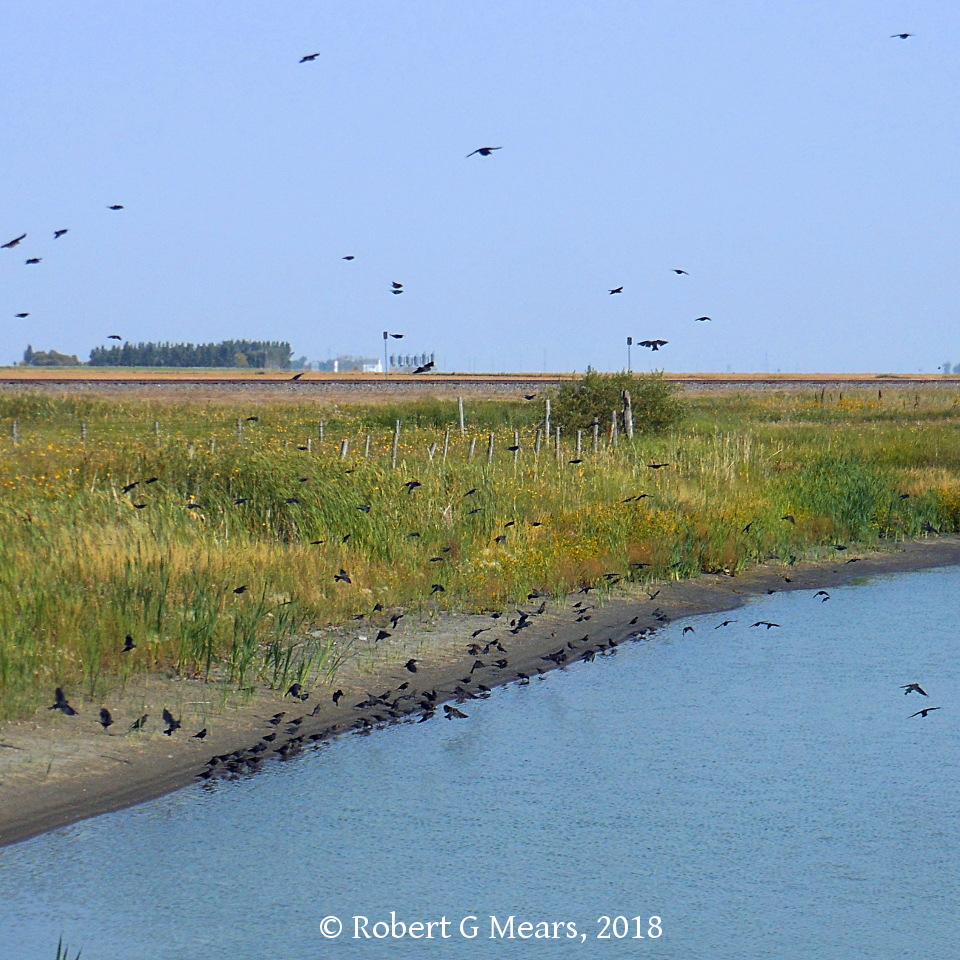
Chirp. Chippee. Chripchirpchirp. Chattee. Yippee! It's migration time. First we gather in flocks of hundreds. Then a bath is in order and breakfast. Lots of crickets and grasshoppers here. And seeds from all kinds of plants. Diversity is good.
Say what? Oh, we're Brewer's blackbirds. From a distance we look like cowbirds. Up close our males have dark purplish heads and striking yellow eyes.
180828tap images for gallery view
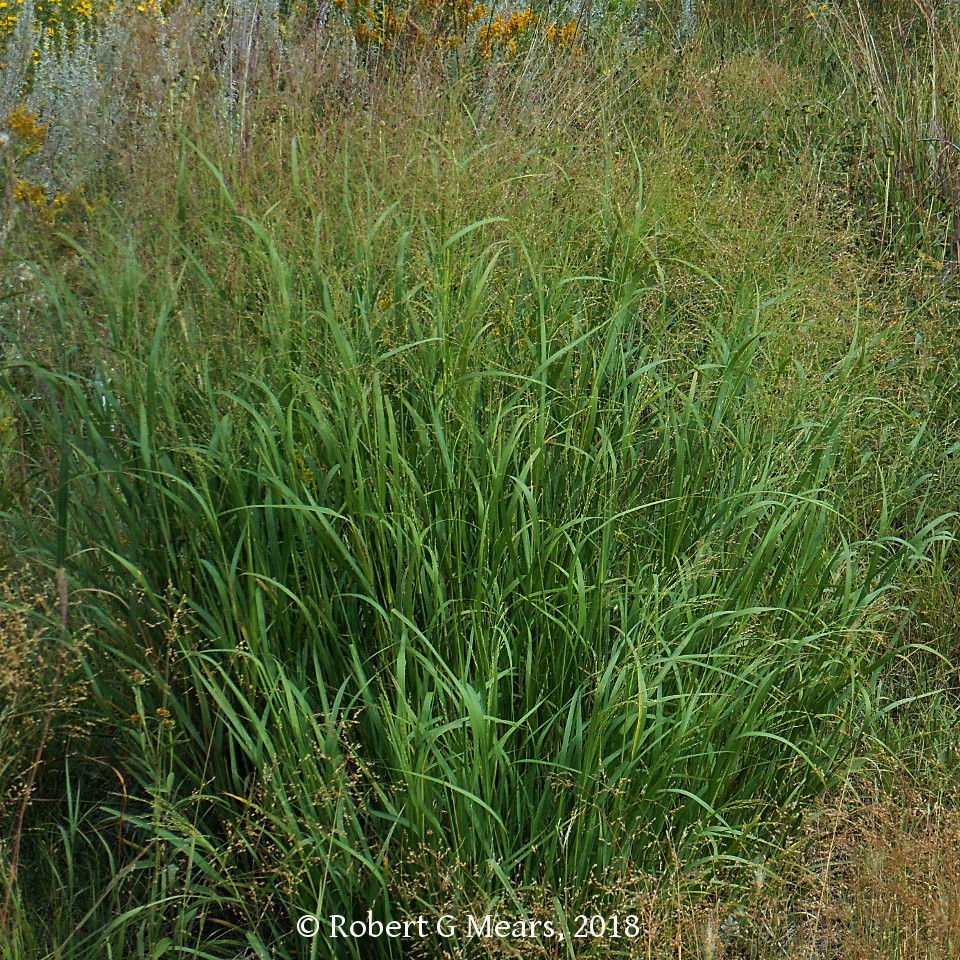
Well, hello. Nice of you to stop by. I'm a switch grass, Panicum virgatum. We're the last grass in the mix to put up our seed stalks each summer. We're different from most tallgrass prairie grasses. That's because we spread by rhizomes which means we're sod forming. While that doesn't mean we would make a good lawn we are excellent forage for grass eating animals.

You're right. I need no introduction. And, being a flutterby poster child there are already lots of images of us. But, this summer the photog has been watching to see which forbs we get nectar from. So far he's seen us on Flodman's thistle, stiff and narrowleaf sunflowers, Canada goldenrod, swamp milkweed, meadow blazingstar (of course) and now on nodding beggarticks. It's good to have variety.