180829tap images for gallery view
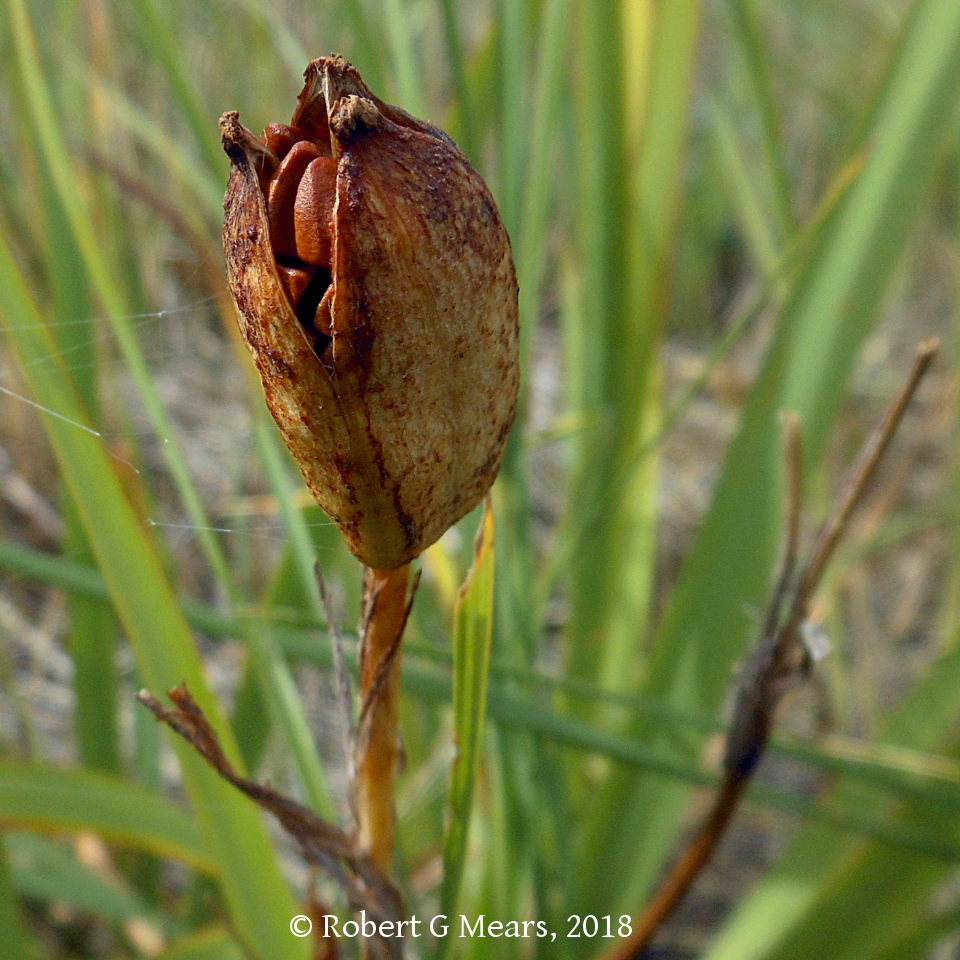
Hello again. No. I'm not sticking out my tongue at you. Those are my seeds. They're a rusty brown colour and very hard. When the pod breaks open they fall to the ground. We like wet areas; water moves them around. And it helps if someone steps on them. Seed to soil contact is important for grassland plants. Oh yeah, I'm a blue flag iris, Iris versicolor.

Hi. Evening primrose again. That's Oenothera biennis to a botan. Yes. These are my seed capsules. When they split open, in four strips, the seeds fall out. That's why we tend to show up in the same area each year. While all parts of us are edible, our seeds contain lots of good things, including an essential oil. You can roast them like sesame seeds.
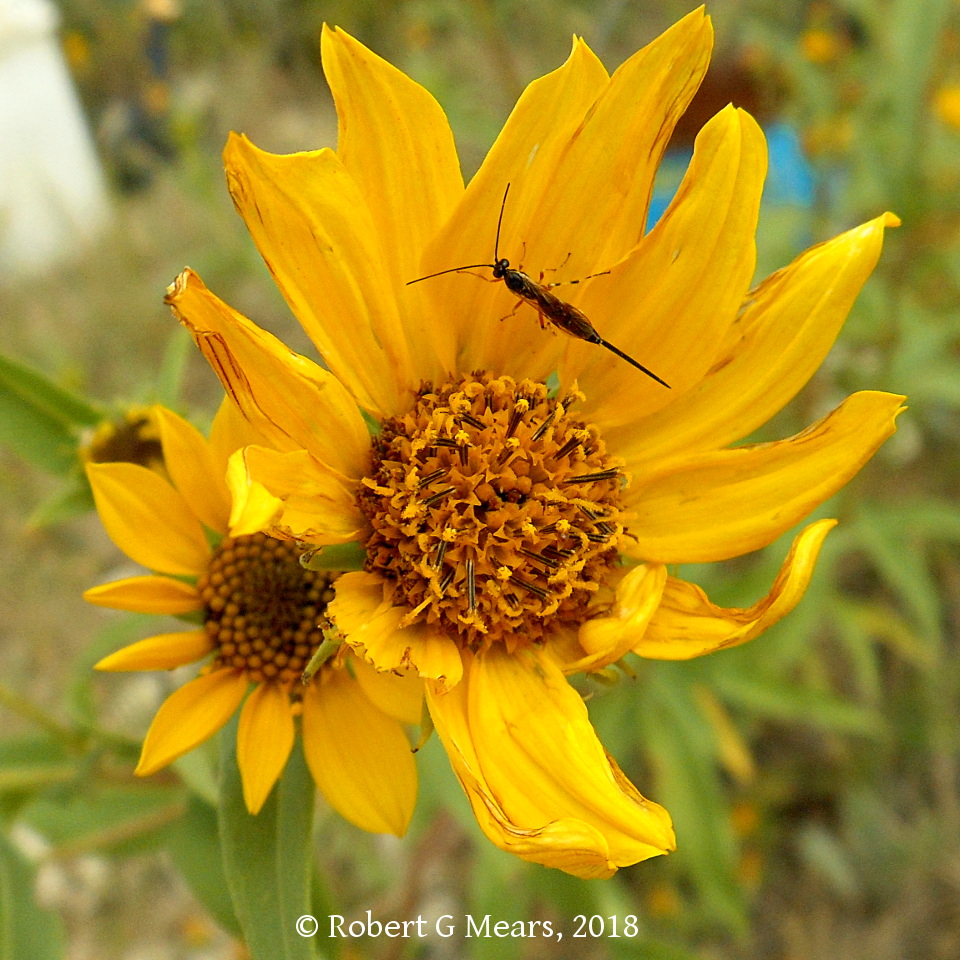
Hey. I'm a parasitoid wasp. Earinus limitaris to an entom. No. That's not a stinger. It's an ovipositor. We use it to lay eggs in or near Lepidoptera offspring. Then our little guys eat the flutterby and moth eggs and caterpillars. Sometimes they eat adults, too, if we posit our eggs in cocoons or chrysalises. As you can see, we're tiny.
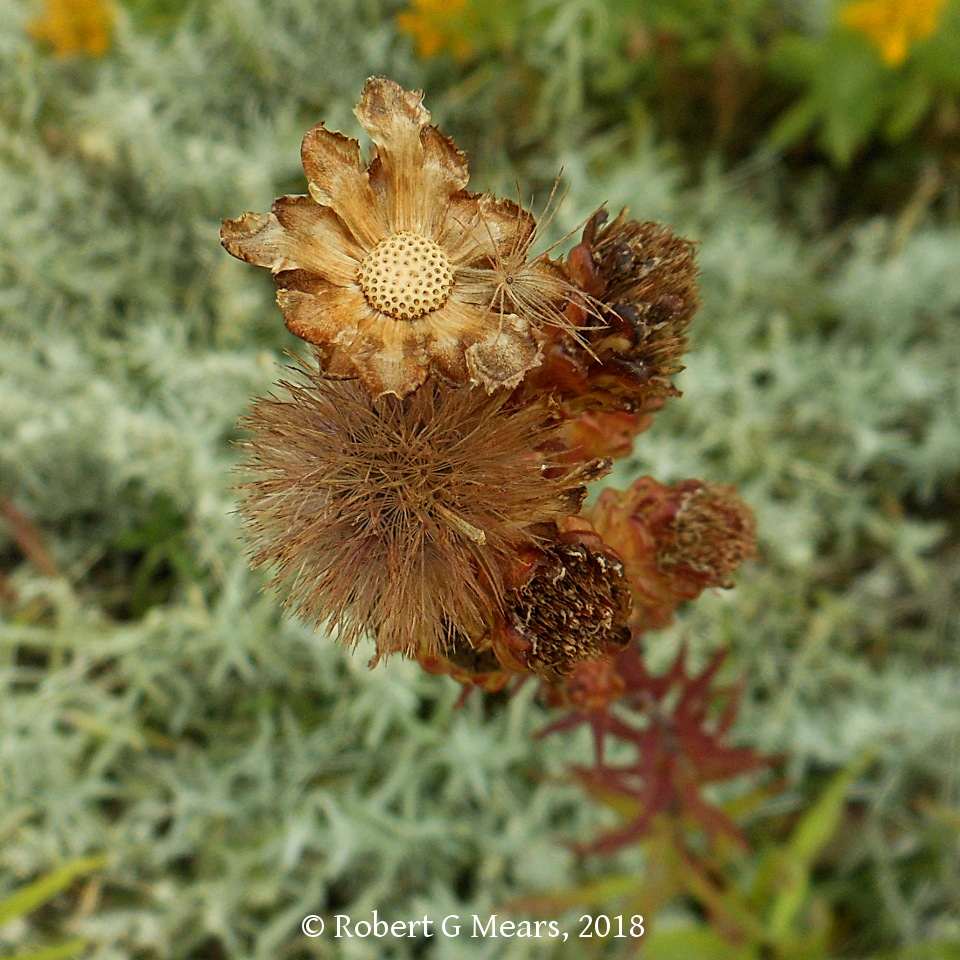
Hello again. As you can see I'm pretty much done for the year. This is my pappus. Our seeds are slightly different than the hawkweed. The feathery hairs are attached to the seed. They still act like parachutes so the seeds can move around some in the wind.
Oh yeah. I'm a meadow blazingstar, Liatris ligulistylis.
180830tap images for gallery view
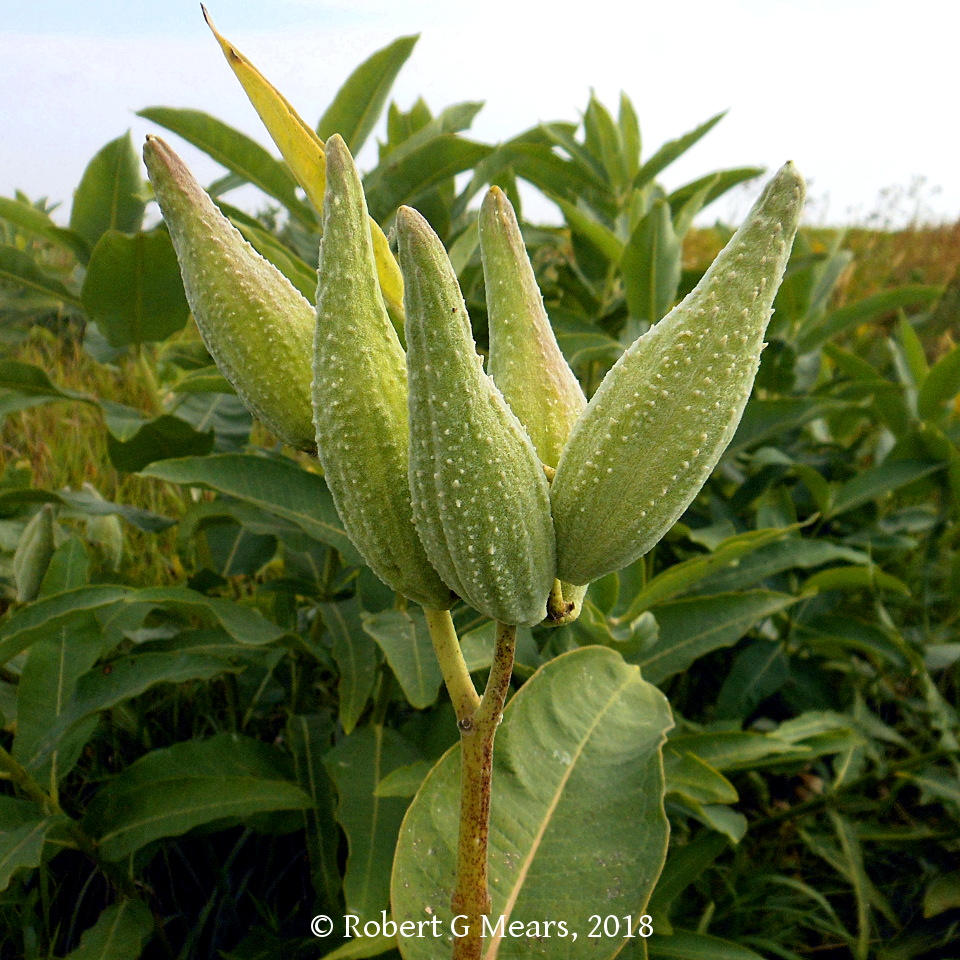
Hey! Common milkweed, Asclepias syriaca, again. These are my seed pods. They'll split open from the top in another month or so. Then my seeds with parachutes will disperse.
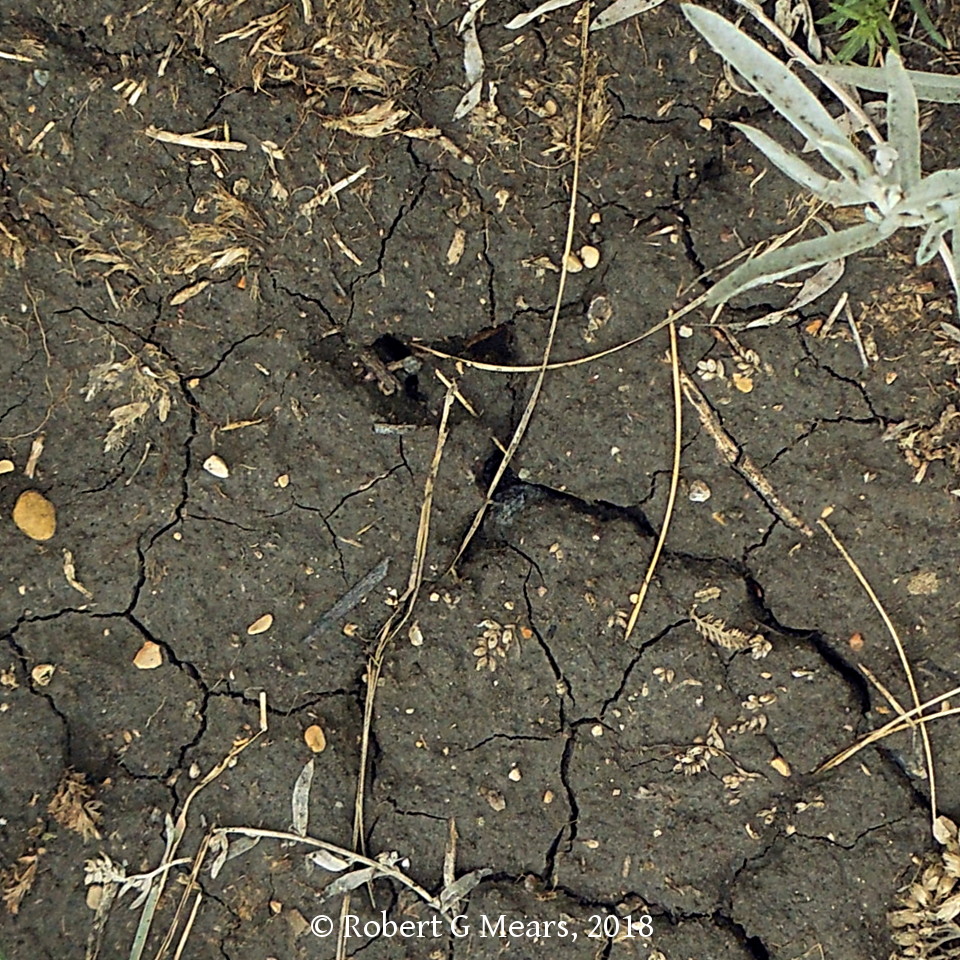
Remember vertisolic soil? This is what happens when it gets wet. The cracks close up. And pebbles and rocks move to the surface.
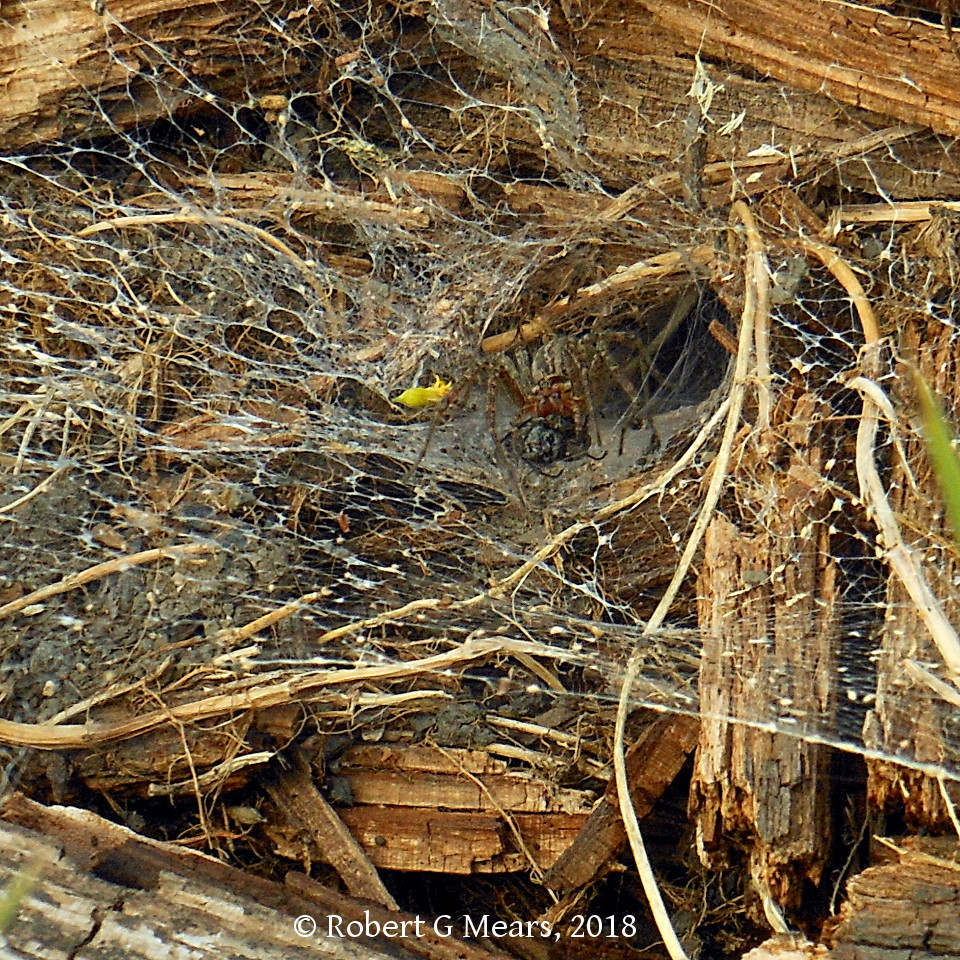
Oh oh. You spotted me. Must be the distraction of this fly I'm munching. Usually I run back into the hole behind me. I'm a funnel weaver spider, Agelenopsis Spp. Some people call us grass spiders because when we don't have a great pile of rotted wood for our webs we make them in grass.
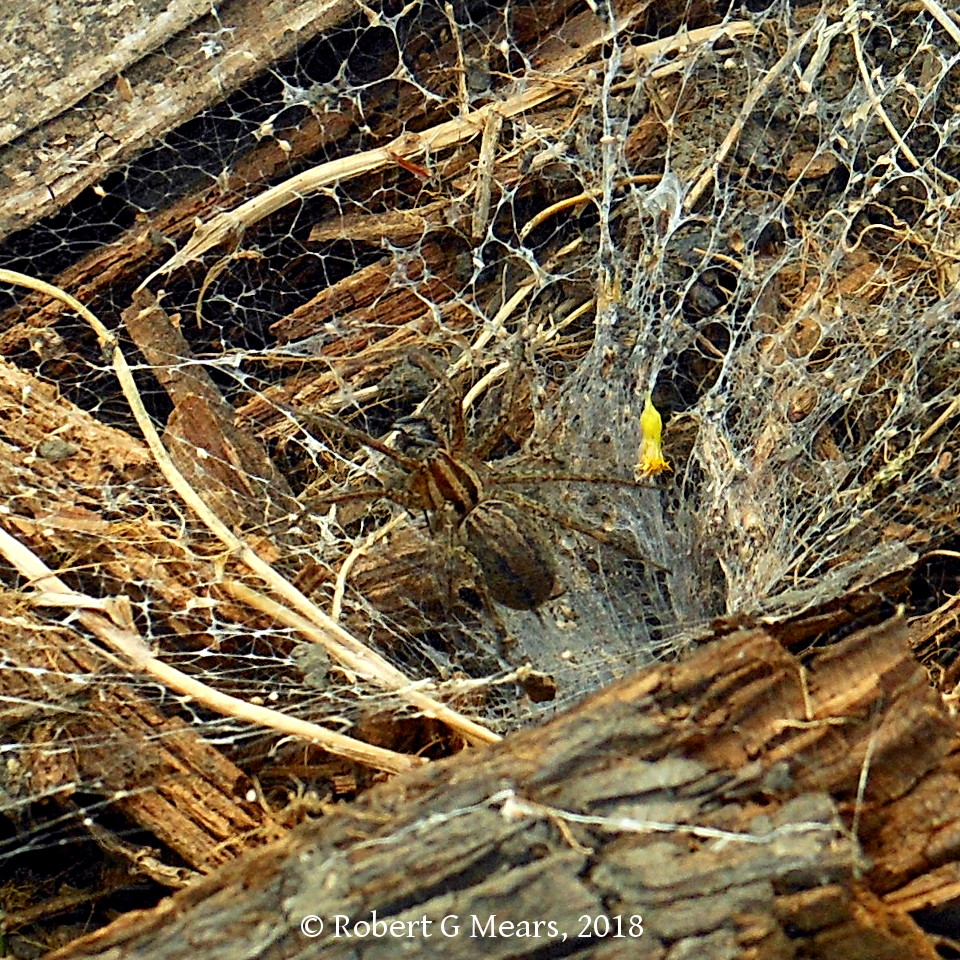
You're right, my camo's so good you have trouble seeing me. Maybe this second photo will help.
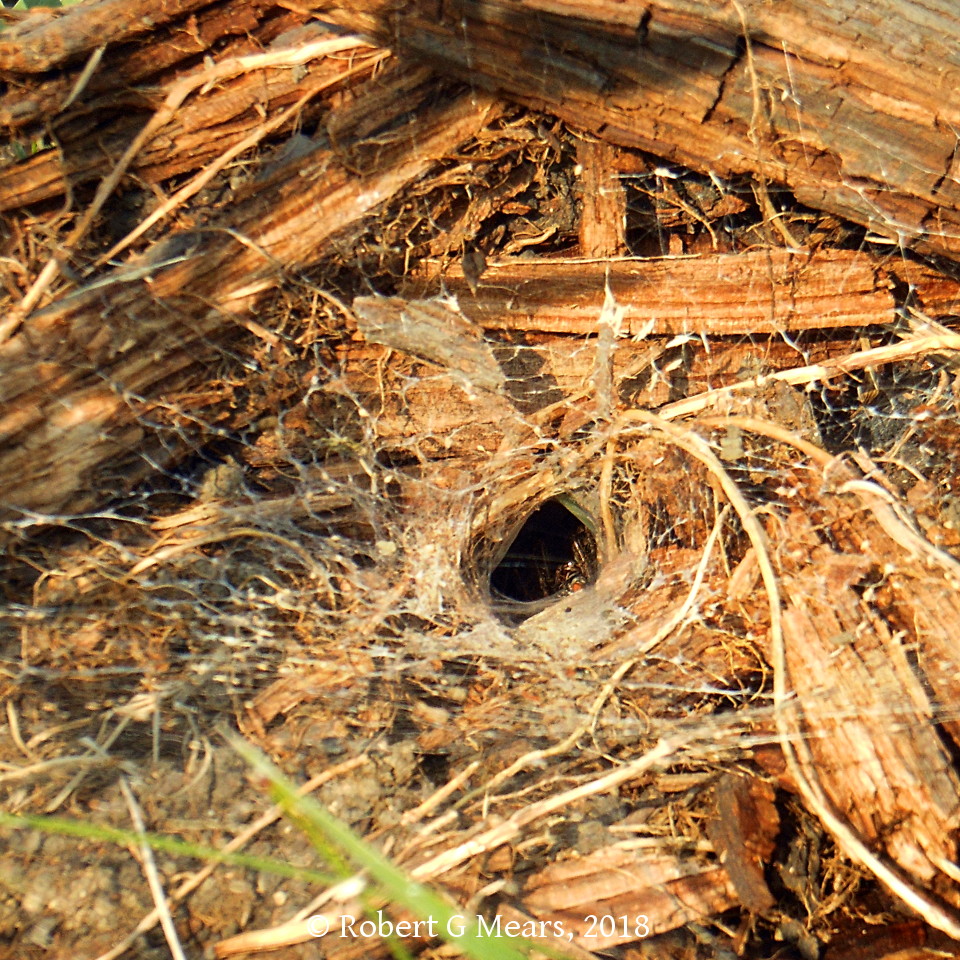
And that's me in the hole.
180831tap images for gallery view
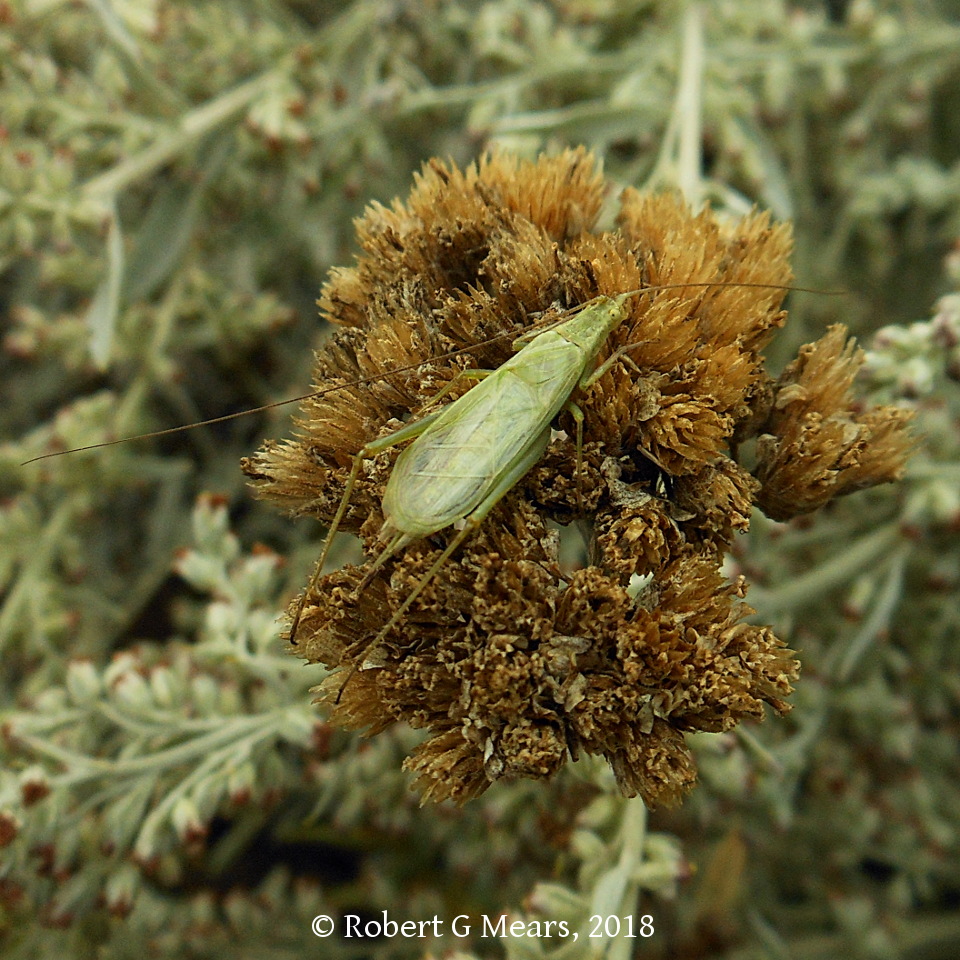
Hello. I'm a male tree cricket. Probably prairie, Oecanthus argentinus. You know when we're around because we make a continuous trill sound by rubbing our fore wings together. We're omnivorous. When our young hatch in the spring they especially like aphids.
You can hear our song here.
180902tap images for gallery view
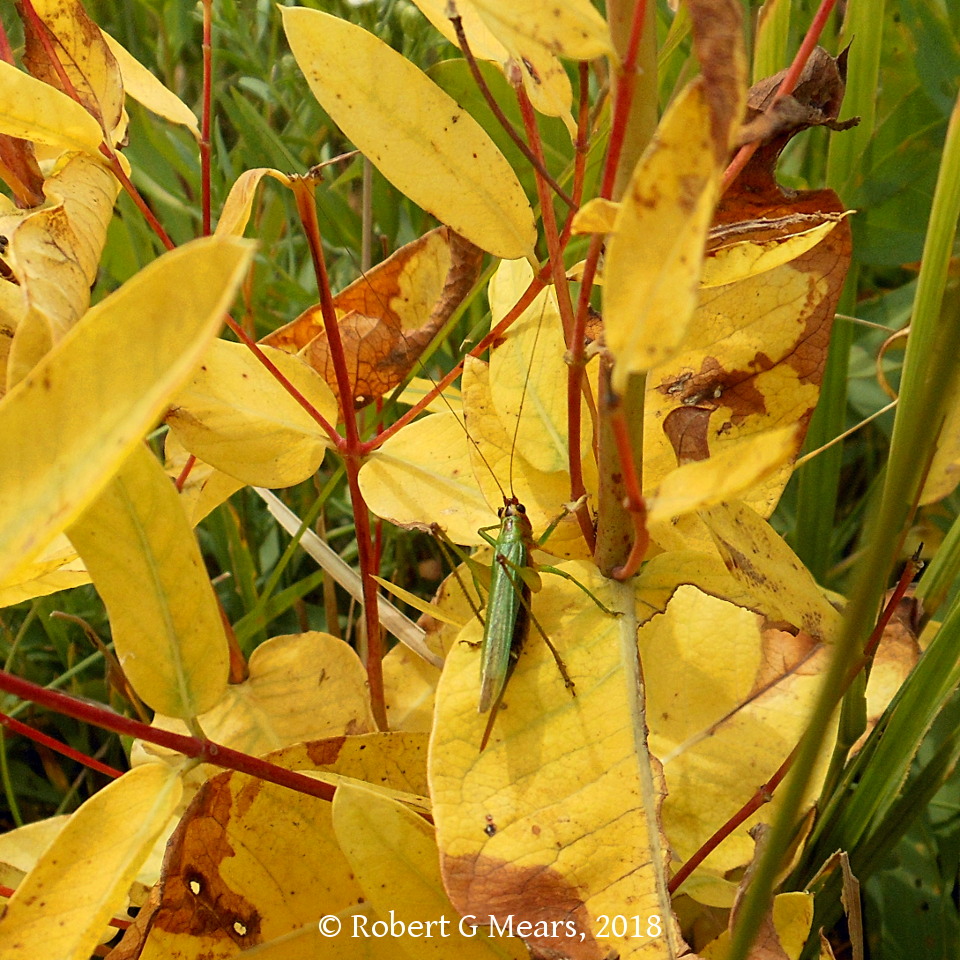
Oh, hi there. I'm a female prairie tree cricket. For me, it's all about the music. The male with the best song gets my attention. After we get together I lay my eggs in hollows in tree bark and such. That's what the ovipositor is for.
"Bug" Eric R. Eaton tells you all about it here.
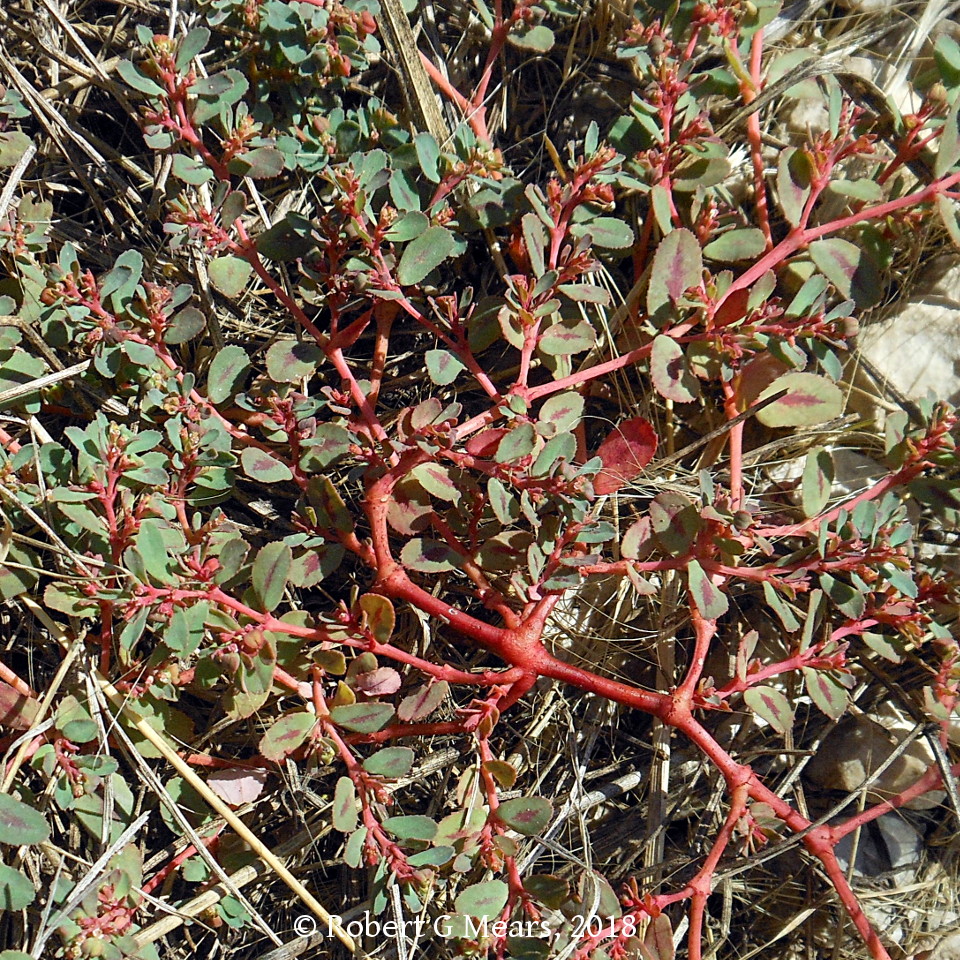
Hello. The tenders of this site have seen us over the years. They thought we're exotic weeds. But you know what? We're native. We're called spotted sandmat, Euphorbia maculata. We grow close to the ground.
180905tap images for gallery view
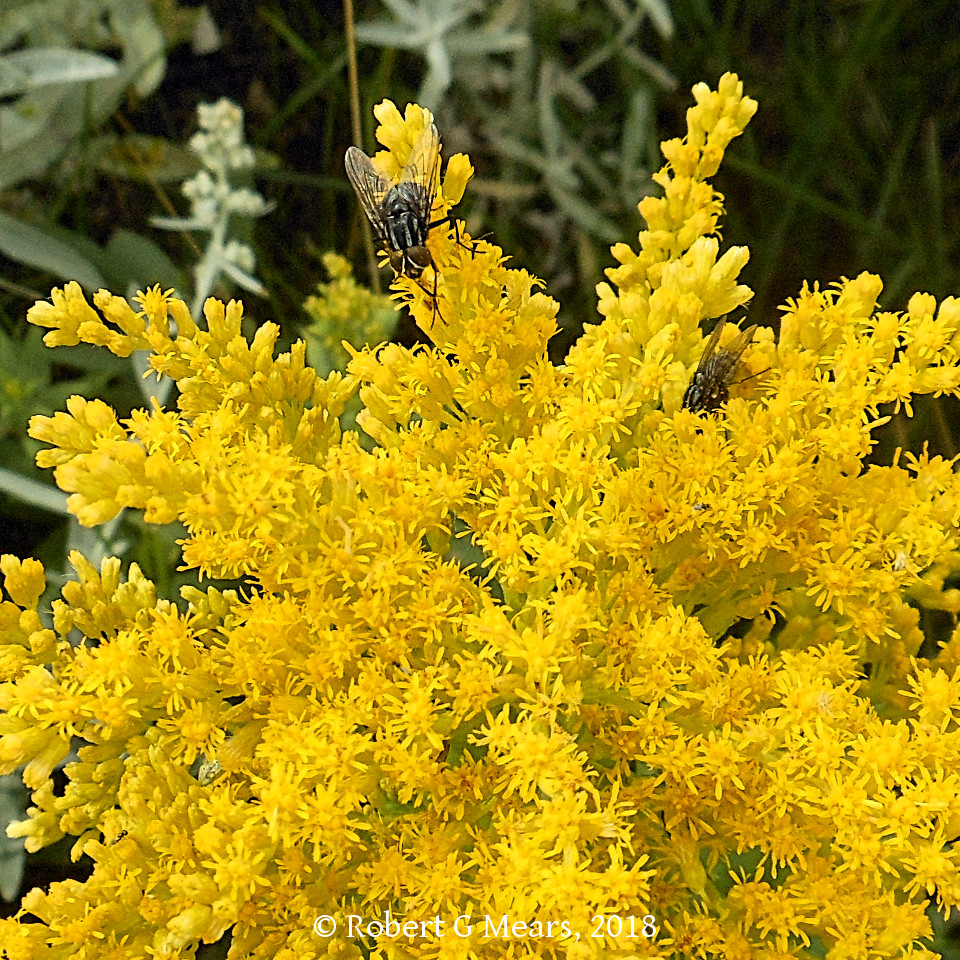
Hey. I'm a Tachinid fly. Probably a Drino rhoeo in science speak. You don't need to worry about us coming in your house. We're too busy with nectar from flowers. And our females lay their eggs near or on mostly moth caterpillars; sometimes flutterby caterpillars. When we start out we eat them.
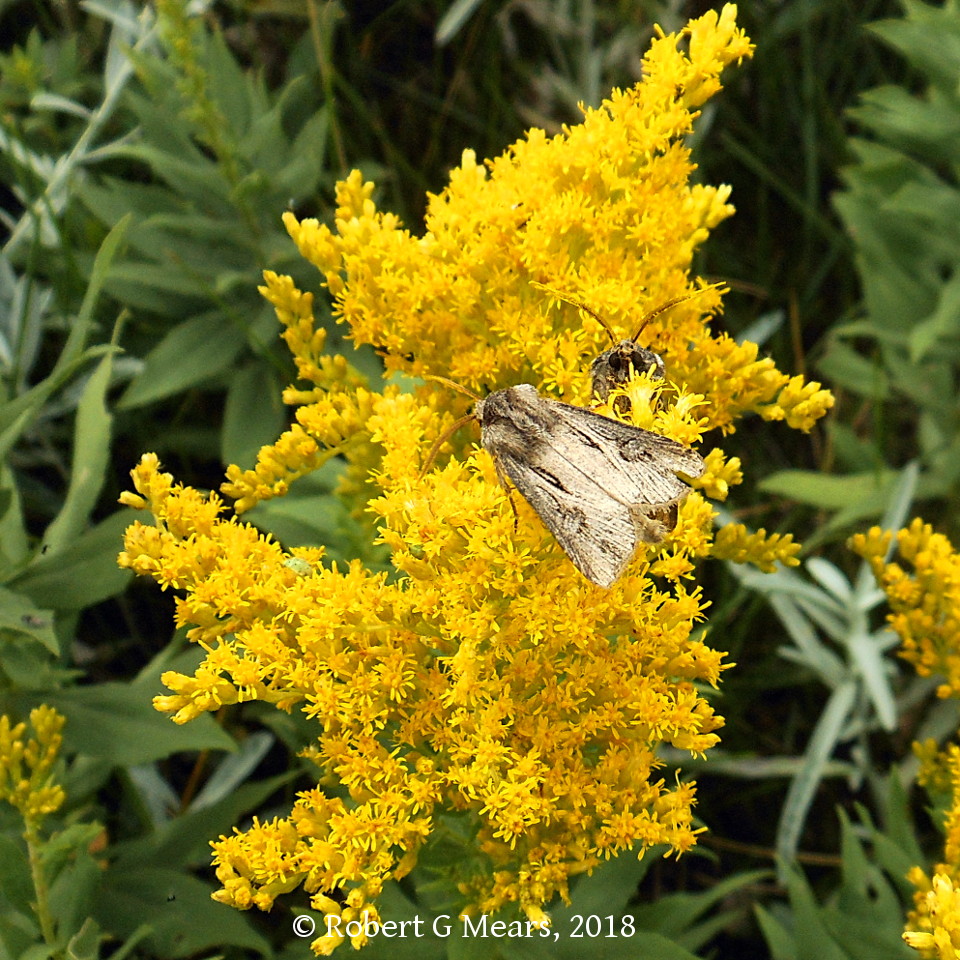
Hello there. We're moths. Possibly cutworm or armyworm moths. Tachinid flies like to eat our worm-like caterpillars when they're small.
180908tap images for gallery view
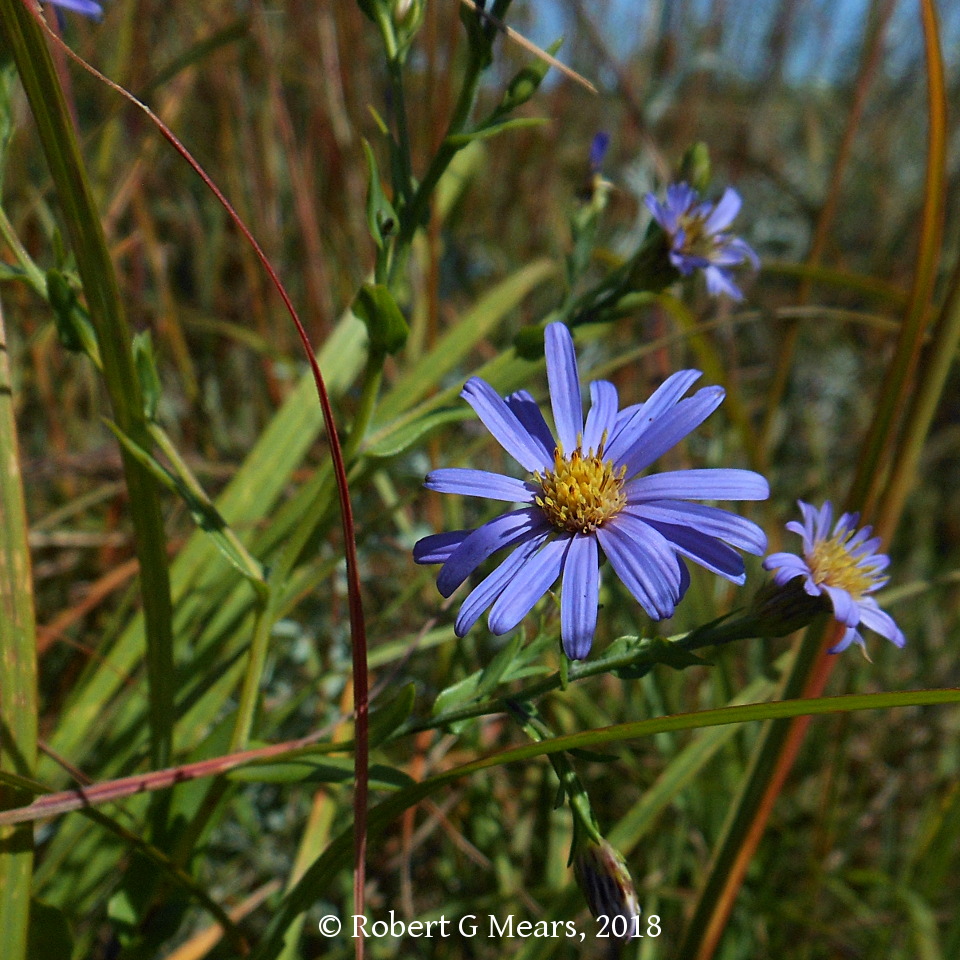
Hey. Nice of you to stop by. I'm a smooth aster, Symphyotrichum laeve var. laeve. Go ahead, say, "simfiotrickum". Feels good, eh. Sometimes our petals are blue violet. Sometimes they're pale violet. Like all asters we bloom near the end of summer. Someone has to feed the little critters. Lots of insects like our nectar.
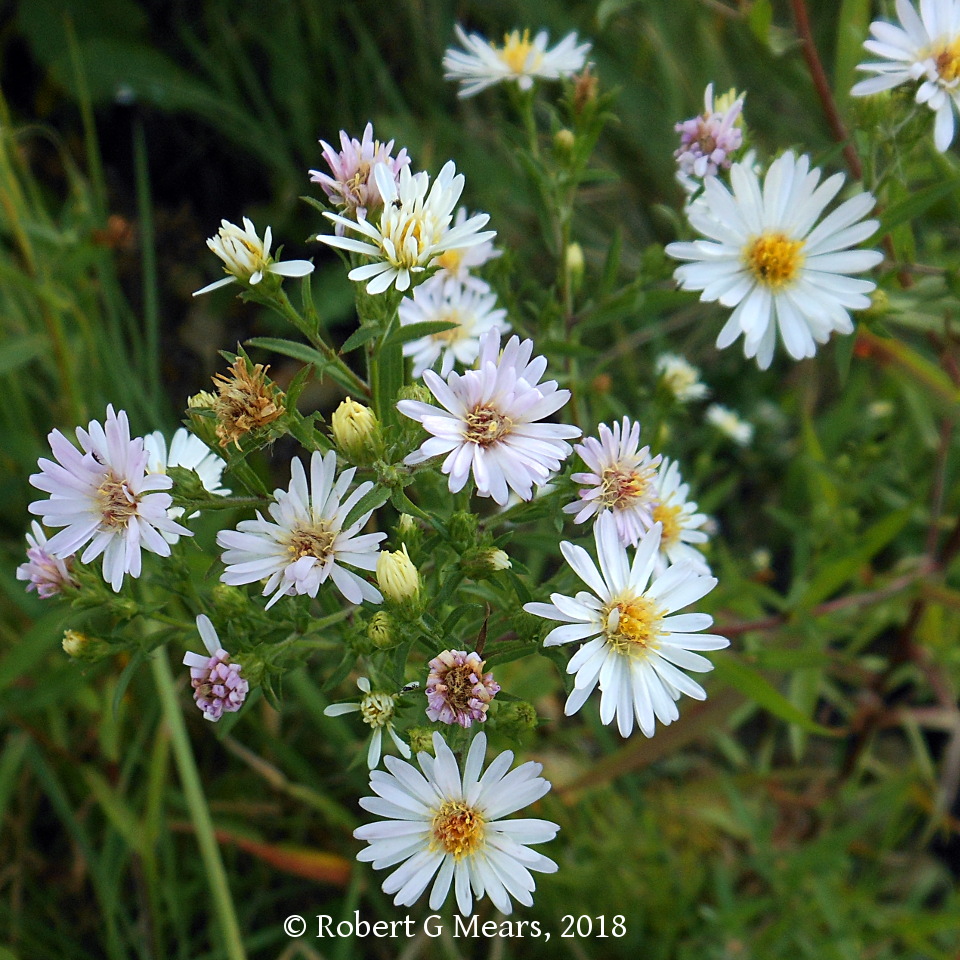
Hey man. Good to see you. Yeah, I know, you've been watching and watching, waiting for our flowers to open. Late bloomers we asters are. Oh, right. I'm a white panicle aster, Symphyotrichum lanceolatum ssp. hesperium. The tenders of this site took us to the herbarium at the U of Manitoba to find out what we are.
Mostly our petals are white but sometimes they're pale pink or purple.
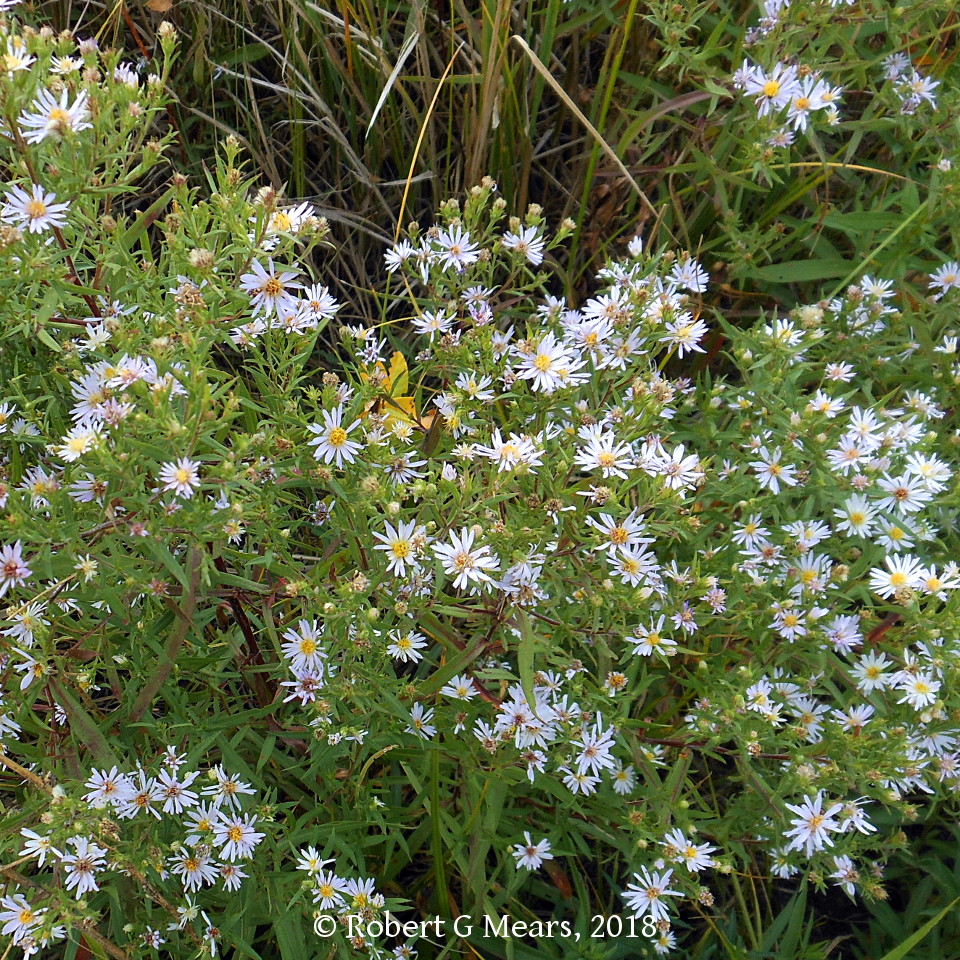
Hey. White panicle aster again. We grow in groups because we have rhizomes; you know the root like stems that grow under ground. At a glance you might think we're many-flowered asters. Up close you'll see we don't have as many flowers. Plus our petals are longer. Last year we were swarmed by painted lady flutterbyes. Maybe they'll show up this year.

Hullo. Nice to see you. I'm a New England aster. Some botans call us Aster novae-anglia. And some prefer Symphyotrichum novae-anglia.
As you can see we're not having the best of years. Our petals haven't unfurled. But we're still serving up some of the best nectah in these pahts. Insects don't care so much what we look like.
180909tap images for gallery view
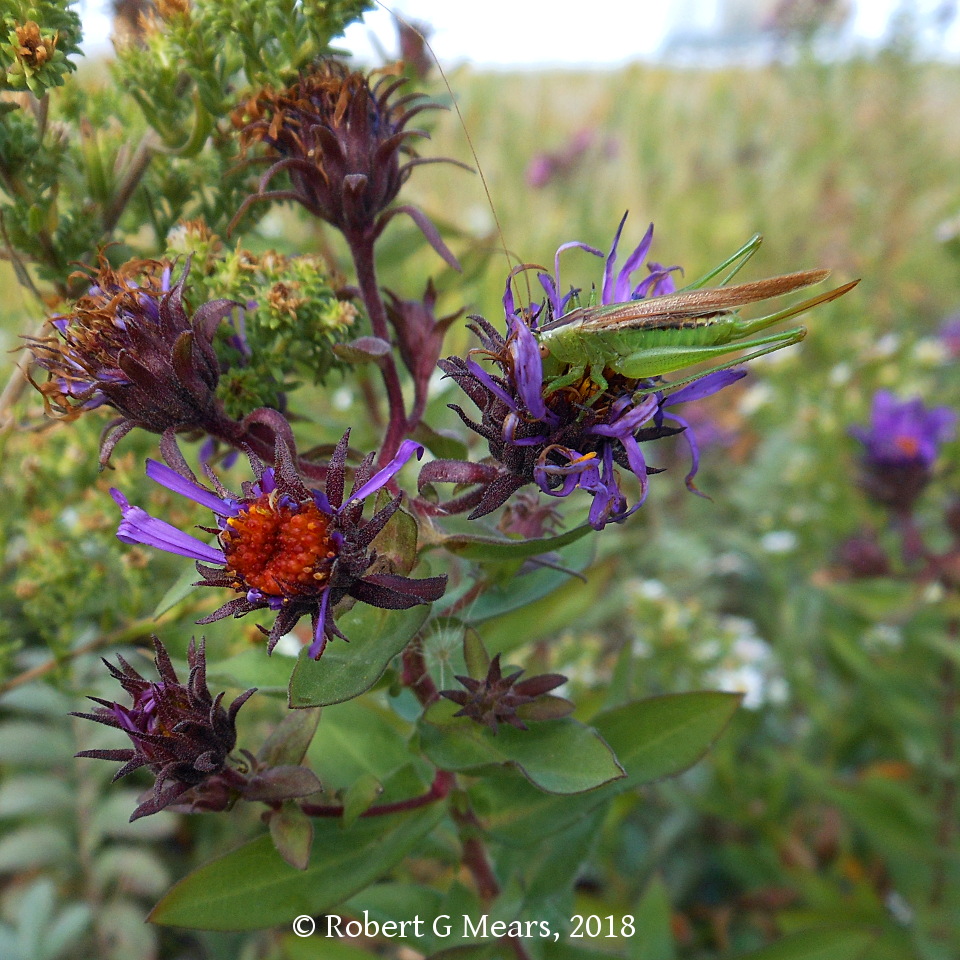
Good morning. I'm a slender meadow katydid. Conocephalus fasciatus to an entom. I'm just hanging out here, taking a break. When it's time for lunch I'll go eat some grass blades or seed heads.
Say what? That's my ovipositor. I use it to bury my eggs in the ground. Yes, you're right. I'm a female.